As a RD and CDE, I have spent many years educating children (pre-school to graduating year as well as post secondary students) in and outside the classroom. I have personally witnessed the good intentions of teachers and/or lunch monitors where the phrases used may sound harmless but it may actually be the triggering point where a child starts to develop an unhealthy relationship with food.
Two decades of research show that at least a third of females aged 10 to 14 in Canada are dieting and using extreme weight control behaviours at any given time.[1][2]How does this phenomenon come to be?
When I have led interactive grocery store tours and cooking classes, here are some common themes that teachers will ask me to highlight and/or emphasize:
a) Why organic foods are better and vilify conventional produce
b) Vilify dairy products and praise plant based dairy options
c) Highlight how too much sugar intake is bad for you
d) Weight bias is present through the language used
Within the classroom, I have had the privilege to give nutrition seminars and to sit in and observe during meal rounds. Here is what I have noticed:
a) Rules will be set up about how a meal should look like and how it should be consumed.
My daughter who is currently in SK comes home and tells me that she can’t bring dried fruit to school because dried fruit is candy. My daughter also told me that no chocolate is to be packed as a snack. If I did pack a chocolate bar, it’s the Unreal chocolate bar where it’s only coconut, cassave syrup and dark chocolate.
I’ve also personally witnessed a teacher who told a child that she must not eat dessert first. She must consume the rest of her lunch before she touches dessert. As a result, this child did not touch any of her lunch; her whole lunchbox got sent home untouched. The parent of this child was absolutely furious. In that child’s household, order does not matter as long as everything is consumed. The mother will put out all the components of a meal; her daughter will eat at her own pace and choose what she wants to eat.
b) Sugar has been demonized to the point where teachers will vilify fruit cups (even if it is packed in water) and will praise the child who brought fresh or frozen fruit as a snack.
As a society, we are health obsessed and we like to categorize our foods into two categories:
a) Good Food AKA acceptable, goal worthy, praise worthy, admirable, feel good
b) Bad Food AKA unacceptable, guilt, cheat food, shameful, fake food, brain rot, garbage, junk food
Do you notice the difference in language used to describe the two categories? As educators & parents, we unconsciously or consciously have characterized food and this type of characterization may have lasting impression on our children.
I have personally counselled many individuals where they have told me that they have eaten countless amounts of Oreos, Dunkaroos and Lunchmates; however, they would never think to give their children now those options. If their child did eat an Oreo, it was at a birthday party. While at the grocery store, I’ve run into patients with their shopping cart. They thought I was judging them and the patient would provide an explanation for each and every “junk” food.
In our society, people often talk about the term food literacy; however, if someone takes a deep dive into this word, they would realize that food literacy encompasses many different components of which one is nutrition; other components include: food preparation, knowing where food comes from, self efficacy and confidence as well as developing a sense of empathy when it comes to social determinants of health.
In the school system, I believe everyone would agree that nutrition is highly emphasized; however, very little emphasis is focused on teaching the kids where food comes from, how to shop for foods, how to prepare foods and why food is eaten. In recent years, I see initiatives where more conversation around the latter topics are taking place; however, this has yet to become standard practice.
Too many individuals shame or put judgement into their own eating habits if they eat a food that is deemed unacceptable by society. Once someone recognizes that they’re not a bad person for eating that particular food in one instance, that person can realize it’s not a big deal. Consuming something that is deemed unacceptable by society one time won’t affect your health in the long run as health is often affected by patterns over a certain period of time.
How do we create an environment where food is not just about nutrition and is put in a positive light?
For the younger children (preschool to grade 1), let’s centre the conversation around these main themes:
a) Food can be an experiential experience using all 5 senses. It would be great if you could bring the children to a farm or a grocery store tour because having a visual for these young children can be so helpful.
b) You may expose the child to a new fruit or vegetable; however, it is important to remember not to praise the child who tries the new food and vilify the child who does not try. Each child will try when they are comfortable and they will gain comfort at their own pace.
c) Talk about cultural practices and what types of food might be eaten at certain times of the year.
d) Basic food preparation methods can be introduced such as grating, mixing, measuring and chopping (with a kid safe utensil).
For the children slightly older (grade 2-4), let’s centre the conversation around these main themes:
a) How do we keep food safe? How did refrigeration come to be?
b) Talk about the history of the food guide and how it came to be during the wartime to make sure everyone had enough to eat. Building on that, discussion should be had if this one food guide is suitable for everyone. Hear what everyone in the class might have as a typical lunch or dinner at home.
c) Talk about how the tongue works and talk about the different flavours and how they may be related to food. Kids are often fascinated by the digestive system so that is often a popular topic of discussion.
d) Build on the food preparation skills where they can get into more complex recipes. Kids often take such pride in their own creation and they can’t wait to gobble it up afterwards.
e) Work on a simple budgeting assignment where they are to create a lunch (i.e. sandwich and vegetable sticks) for the class using a certain amount of money. Have the kids build the lunch and eat together afterwards. Eating together builds the connection that food brings to the table. Working with a certain budgetary limit will help students understand that not everyone’s food choices are the same if social determinants of health are at play.
For children who are older (grade 5 and above), this is where we can start introducing concepts like carbohydrates and how all the nutrients can interact with each other. We can really start talking about the science behind nutrition.
With the themes highlighted above, the focus is on food and not so much on nutrition so we can help to nurture the concept of intuitive eating and how to listen to our bodies and recognize that all foods have their time and place. It is an effort where the everyone is involved meaning the educators and the families involved have to step back and take a look at their own biases and realize how their language around food can be harmful in helping their child to develop a healthy relationship with food.
By the time the concept of nutrients is introduced, I am hoping that each child will have the ability to listen to their internal regulators to tell them what they want to eat and what they don’t want to eat. Research often shows that extreme restriction of any type of food leads to even stronger urges which could lead to binge eating(3).
Labelling foods as “good” versus “bad” appears to impede internal regulators of appetite and satisfaction and promotes disordered eating[12][45][46].
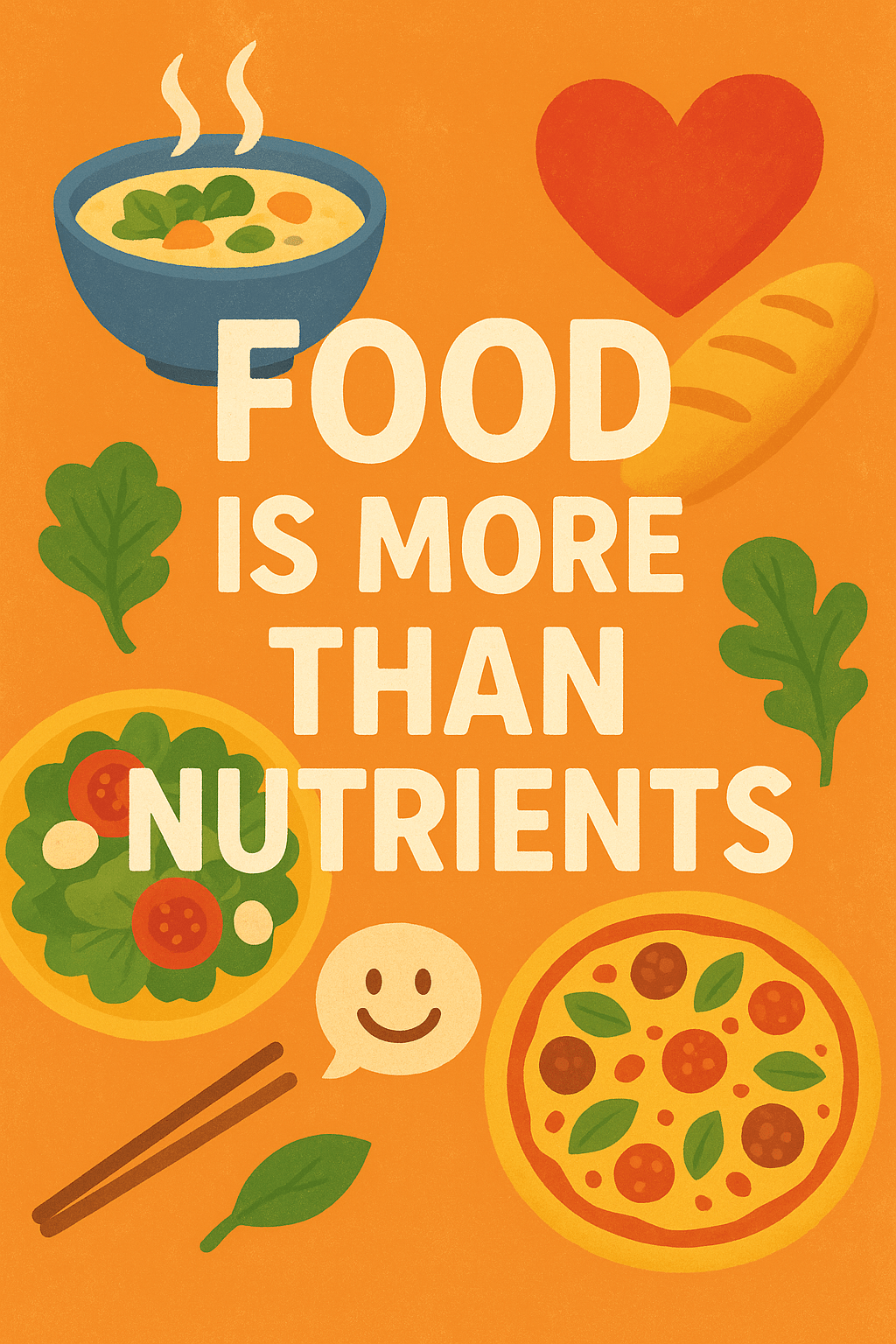
At the grade 5 level or above, it’s a great opportunity to take back control of what the word “health” or “healthy” means to everyone in the classroom. Some will answer that food is a source of nutrients; however, discussion will make students realize that food symbolizes so much more than nutrients. Food symbolizes comfort, connection and meaning in a way that not only helps us with our physical and mental state but our psychosocial state as well.
Food For Thought: Food is very powerful and we, as educators, have a responsbility to ensure that the next generation understands that food is more than just nutrients.
What unconscious and/or conscious bias do you have about food? What concepts do you need to unlearn?
References:
- Smith A, Poon C, Peled M, Forsyth K, Saewyc; McCreary Centre Society. The Big Picture: An overview of the 2023 BC Adolescent Health Survey provincial results. Vancouver, B.C.: McCreary Centre Society; 2024. https://mcs.bc.ca/pdf/2023_bcahs_the_big_picture.pdf (Accessed September 10, 2025).
- McVey G, Tweed S, Blackmore E. Dieting among preadolescent and young adolescent females. CMAJ 2004;170(10):1559-61. doi: 10.1503/cmaj.1031247
- National Eating Disorders Collaboration Australia
- Golden NH, Schneider M, Wood C; AAP Committee on Nutrition, Committee on Adolescence, Section on Obesity. Preventing obesity and eating disorders in adolescents. Pediatrics 2016;138(3):e20161649. doi: 10.1542/peds.2016-1649
- Eneli IU, Crum PA, Tylka TL. The trust model: A different feeding paradigm for managing childhood obesity. Obesity (Silver Spring) 2008;16(10):2197-204. doi: 10.1038/oby.2008.378
- Palascha A, van Kleef E, van Trijp HC. How does thinking in Black and White terms relate to eating behavior and weight regain? J Health Psychol 2015;20(5):638-48. doi: 10.1177/1359105315573440
- Full Bloom Project Podcast Season 4 Episode 83 https://open.spotify.com/episode/1Dn6hzPoAYtccZ7LYYcFxd?si=yngjFAznQbWX_FQB3K-oFg
 Rowena Recommends
Leave a comment